
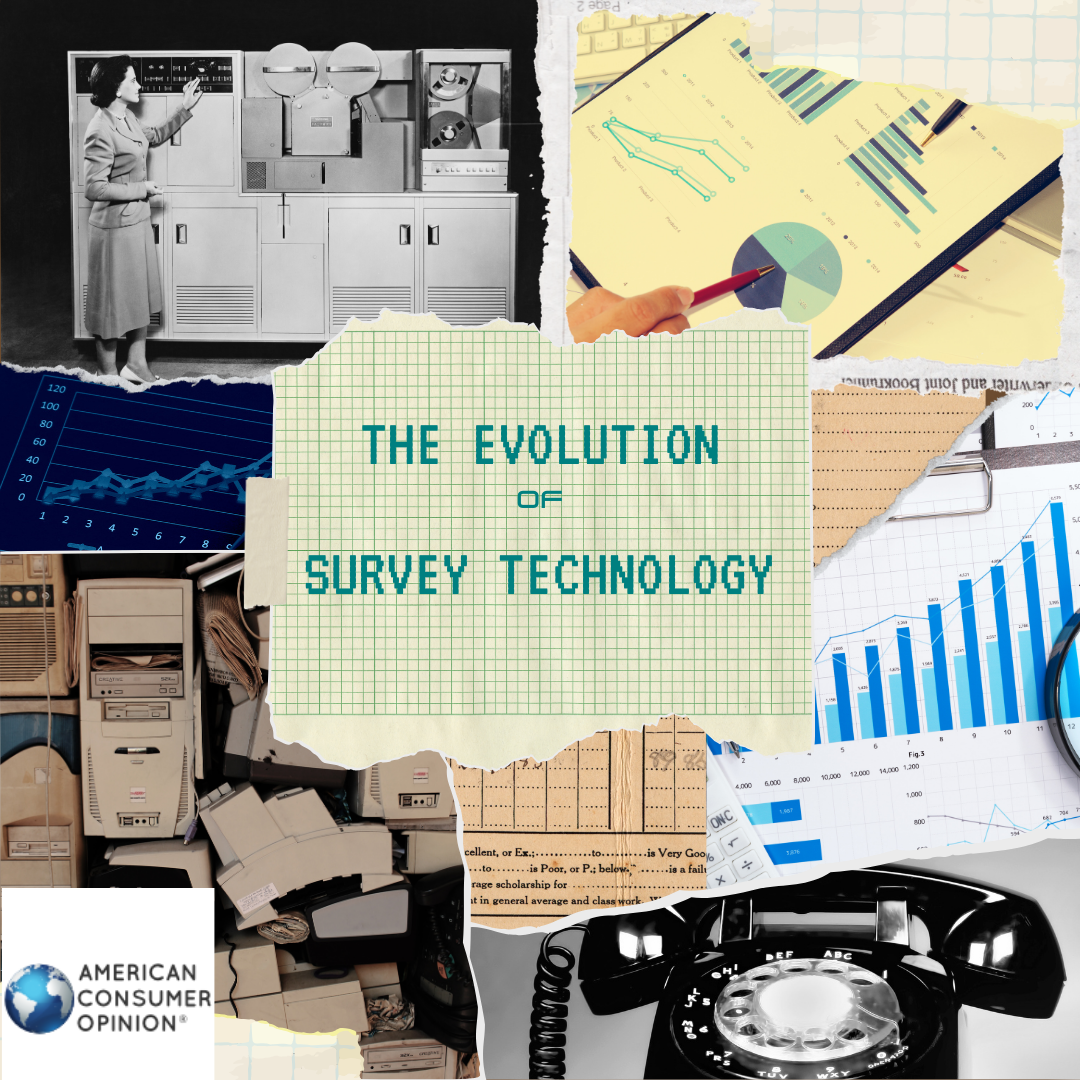
Evolution of Survey Technology
Evolution of Survey Technology
Surveys are a relatively new concept. They were first created in the 19th century, and were nothing more than simple paper questionnaires and face-to-face interviews. Today, though, surveying is much more complex, utilizing computers, the internet, and even artificial intelligence. However, how has surveying evolved, not just in technology, but also methodology?
Paper and Pencil
As stated, surveying started out simply. In fact, it was very different from what it is today. At the time, surveys were conducted by companies themselves, asking their customers what they preferred and what they didn’t. There were no experts in these days: most of the decisions were made by the business leaders who were driven by instinct, anecdotes, and experience. Surveying did not become a proper research method until the late 1930s, when sociologists began to implement strategy.
The main drivers of survey research, Jerzy Neyman, George Gallup, and Arthur Nielsen introduced more scientific methods to surveying. They encouraged random sampling to get a better, more accurate understanding of a wider population. Standardization came about, allowing surveys to be produced and analyzed more quickly and efficiently than before. However, the technology up to the 1950s did not allow for much more than face-to-face interviews. Large, national surveys run by one organization took far too much time and effort, and so surveying companies began investigating new ways to improve.
Rise of the Telephone
As surveying became more advanced, so too did the technology. With the growth of surveying and the demand for market research expanded, face-to-face interviews were no longer viable. Survey companies turned to the mail system. Surveys were sent out to random population through the postal service and returned the same way, a method still used today. As telephones became more popular in the 50s and 60s, telephone surveys became popular too, and allowed surveyors to reach many more people much quicker.
Techniques changed with the times, too. Surveyors began to prefer quantitative methods, searching for responses rooted in numerical factors rather than personal anecdotes. More industry standards started to emerge, including increased random sampling, greater structure to questionnaires, and the use of statistical analysis. A shift also occurred in thought: rather than simply knowing what customers wanted, surveyors began to ask “why”. This helped them inform market strategies not just for current products and customers, but also for the future.

Computers and the World Wide Web
The invention of computers revolutionized the survey industry. It allowed survey analysis to happen at a much faster rate, and for larger amounts of data to be collected, analyzed, and stored than ever before. It also allowed for new methods of data collection. For example, CATI, or Computer-Assisted Telephone Interviews, helped researchers conduct phone surveys at a much faster rate.
The rise of the internet led to an enormous shift in how surveys were conducted. While many felt internet surveys and online panels were a waste of time, they quickly became the future. For the first time, market researchers could reach an infinitely wide audience for a fraction of the usual costs. Email replaced mail-in surveys, and as landline phones were overtaken by cell phones, phone interviews were replaced by online focus groups. Online panels sprung up, which could reach a massive group of willing survey-takers all online.
Market research boomed again in the 2000s with the arrival of ‘big data’. Social media, e-commerce, and smartphones led to a massive influx of digital consumers, who brought with them data that could be analyzed. Advanced analytics, machine learning, and predictive analytics came about, giving deeper insight into the purchasing behavior of digital consumers. Today, artificial intelligence is used to analyze this data even further, as well as to predict consumer sentiments and future trends.
The Past and The Future
As you can see, market research has changed drastically since its early days. Phones, computers, and the internet have made the world a lot smaller, allowing surveyors to cast a much wider net. What would have been impossible for a researcher a hundred years ago can now be accomplished in a few days with modern technology. Greater emphasis has been placed on accuracy and analysis than ever before, and developments in sociology, psychology, and statistics continue to change how we view our data and interact with our respondents.
However, not everything is new. Random sampling, first introduced in the very early days of market research, remains an important industry standard. Researchers still use phone interviews sometimes, and product testing still relies on the postal service. Focus groups are just as common as they were in the 50s. These days, though, they’re conducted in online chatrooms rather than boardrooms. Even face-to-face interviews, the very earliest method of data collection, is still in use: this time, the interviewees are AI-generated respondents. It seems like, even after all these developments throughout time, some things just don’t change.