
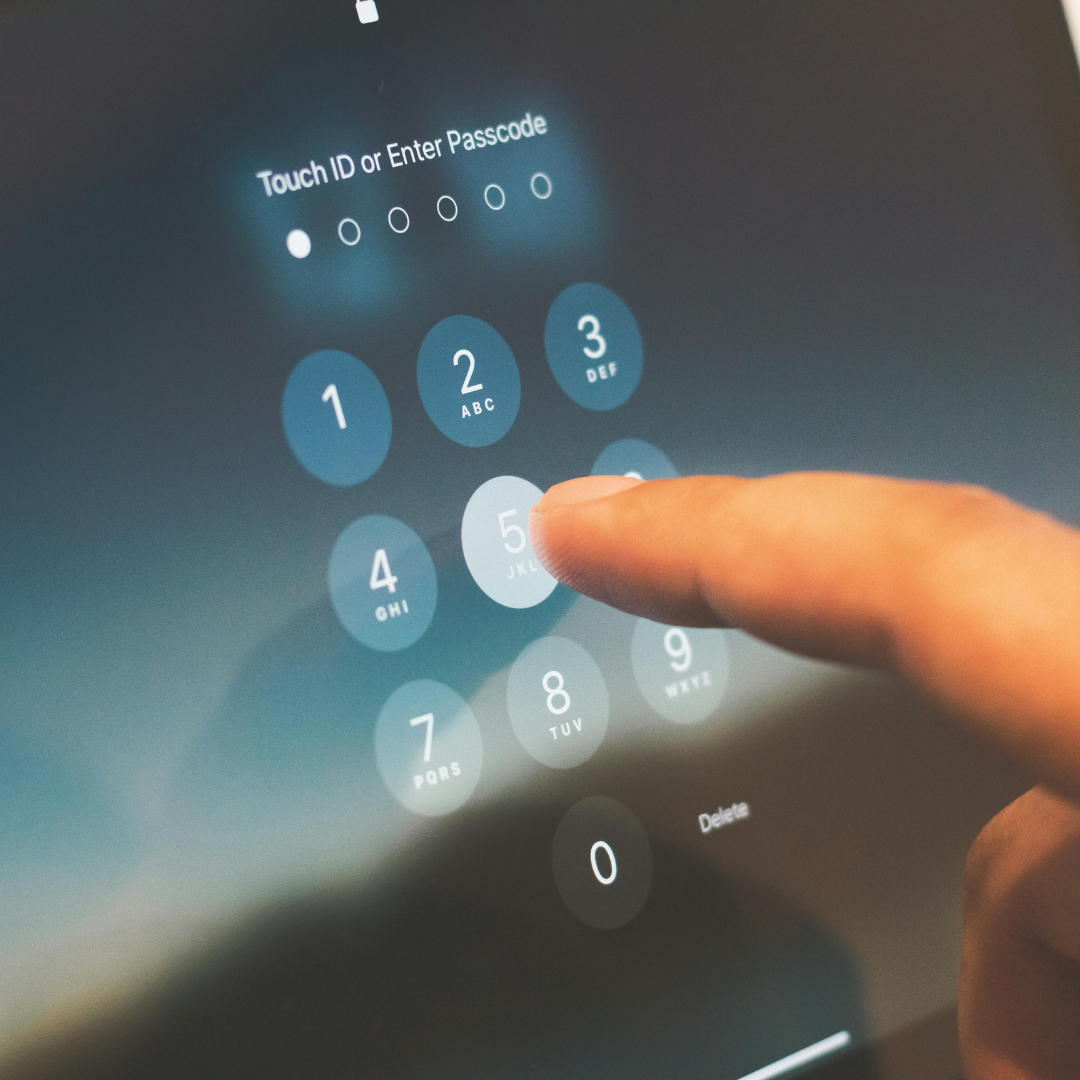
Lock and Key: Account Health and Safety
Lock and Key: Account Health and Safety
There are many ways that your account and your information can be at risk online. There are always bad actors, and they are always finding new ways to try and steal your data. Throughout our blogs, we’ve already discussed some ways to recognize and avoid scams. Today, we’re going to go over some tools to keep your online accounts safe from outside hackers.
A Strong Password
It’s no secret that the best deterrent to a hacker is a strong, unique password. However, what makes a password strong is a little more involved. The best passwords are not just a series of letters and numbers- these are difficult to remember, and not actually that safe. Instead, opt for a passphrase. Passphrases tend to be longer, and the longer the password, the harder it is to crack. A password that’s a jumble of 5-9 characters is much weaker than a passphrase with 14+ characters. It’s also easy to craft a sentence you can remember, as well as sprinkle in a few numbers, capitalizations, and special characters along the way.
More important than a strong password, however, is a unique password. 2024 hosted numerous serious data breaches, including National Public Data, AT&T, Patelco, and United Health. In each breach, hundreds of millions of accounts were exposed to the dark web, including passwords. Thus, no matter how strong your password or passphrase may be, all it takes is one data breach for all of your accounts to be at risk. Having different passwords for different accounts is vital to ensure that, even if one account is compromised, the others will remain secure. SImilarly, it’s important to change these passwords every so often- about every three months. It can be a pain to generate dozens of new passwords over and over, but it’s worth the added protection.
A Secure Connection
Just as bad actors are finding new ways to steal your information, your browsers, apps, and operating systems are finding new ways to stop that from happening. That’s why it’s important to always make sure your software is up to date. Letting your phone’s operating system run a few updates behind opens up the risk to exploitable bugs and loopholes in the old software. Each new update adds a new patch to the security wall of code on your devices, and so it’s important to make sure you receive and install each new update.
It’s also important to make sure that your online connection is safe and secure. Like your devices, your home wifi system should have a password that is strong, unique, and regularly changed. At times where you must be on a public network, make sure that you do so wisely. Don’t access any important information while on a public network, and refrain from any financial transactions that involve putting in bank or credit card information.
A Shrewd Eye
As we’ve mentioned in our other blogs, it can be hard to tell the difference between a scam and a real opportunity. However, it’s a little easier to tell once you know what to look for. Scammers may misspell website names, present incorrect links, or have conflicting information. They may contact you at random with offers that are too good to be true or threats that demand your immediate attention and action. No matter what, if you’re unsure about a message, advertisement, email, or website, the most important thing you can do is to slow down and think. Consider what the information is saying, and think about how you could verify it. Check names against verified sources, contact people over the phone or in person, and hover over links to determine the real address. Your intellect and common sense are your greatest assets in online safety.
At ACOP, safety is our #1 priority. That’s why we invest in strong firewalls to protect our panelists and their data, and why we adhere to several international standards of privacy, security, and safety. However, even as we do our best, security isn’t guaranteed. The best way to protect your information online is through constant learning, practice, and vigilance.